VeriSmart was built on a simple bet: that data doesn't need to move to be useful. Brands, banks, telecoms, and platforms could keep their data exactly where it lived, and still contribute to — and benefit from — a shared intelligence layer built on 610M+ consumer profiles and 1,800+ real data attributes, without a single record ever changing hands.
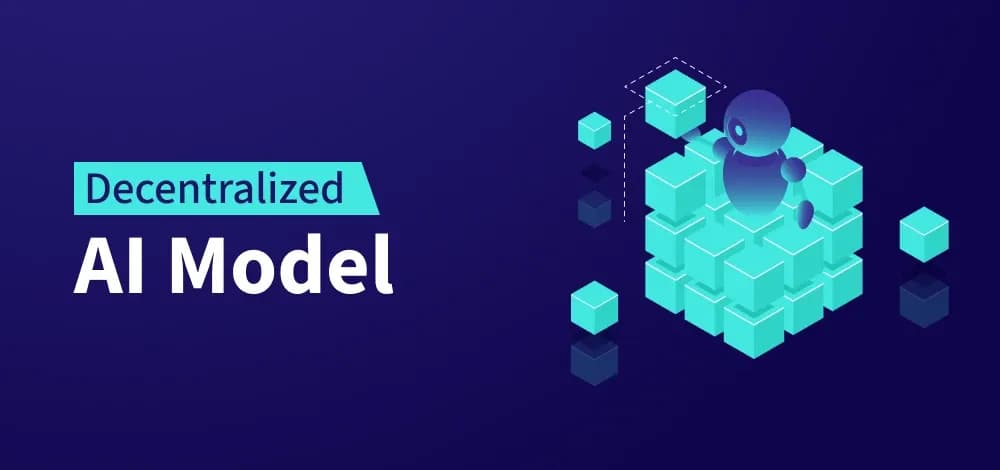
That bet has played out. Now the same logic is heading somewhere bigger: not just decentralized data, but decentralized AI.
Decentralized data solved a specific problem: how do you build shared intelligence without pooling everyone's raw data into one place? The answer was to let the data stay put and move the queries instead.
Decentralized AI asks the same question about the model, not just the data. Today, most AI systems still assume the opposite of what VeriSmart has always assumed about data: that to train a smart model, you need to centralize everything the model learns from. That's the same fragile, high-risk pattern VeriSmart was built to avoid at the data layer — just recreated one level up, at the model layer.
The natural next step is obvious once you see it this way: apply the same architecture that already keeps data decentralized to the AI that learns from it.
In practice, decentralized AI means models that learn from signals across many separate, privacy-preserved data sources — without those sources ever needing to hand over raw data to a central model or a central company.
For VeriSmart's network, this means:
AI that gets smarter without asking for more access. As more first-party contributors join the network, the intelligence layer improves — not because more raw data is being centralized, but because more consented signal is available to learn from at the source.
Audience models that update continuously, not periodically. Rather than retraining a central model on a data dump every quarter, a decentralized approach lets the model reflect fresh, real-time purchase signals as they occur — closer to how the underlying purchase behaviour actually happens.
No single point of failure, for data or for the model. Just as no single breach can expose the whole network's data today, no single point of compromise can expose or corrupt the whole intelligence layer either.
Data privacy regulation like India's DPDP Act already forces a reckoning with how data is collected and shared. AI regulation is heading the same direction, faster — and it raises an additional question data-sharing laws didn't have to answer: not just "whose data was used," but "what did the model learn, and can that be explained or audited?"
A centralized AI model trained on pooled data makes that question much harder to answer. A decentralized model — where the provenance of every signal is tracked at the source, the same way it already is in VeriSmart's blockchain-based data layer — makes it dramatically easier. The trust infrastructure VeriSmart already built for data turns out to be exactly what decentralized AI needs to be accountable.
The practical benefit isn't abstract. It's the same benefit VeriSmart's data model already delivers, extended further:
VeriSmart didn't set out to build a decentralized AI company. It set out to prove that data could be useful without being moved. Decentralized AI is what happens when that same principle gets applied to the model doing the learning — and it's the direction the next generation of audience intelligence is heading, whether the rest of the industry has caught up yet or not.
Want to know what this looks like as it rolls out? Book a 30-minute call and we'll walk you through what's coming.